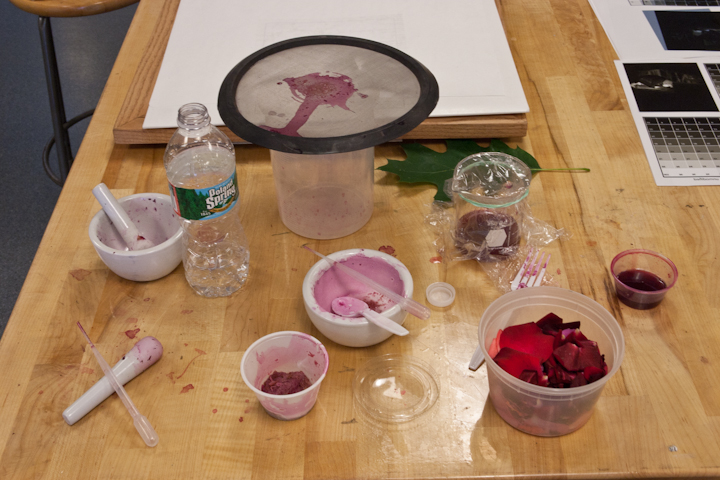
Anthotype science. I like this kind of stuff.
The rose petal extract demonstrates a classic pH indicator color change. I wish I had a pH meter to compare my guesses but for now these estimates will have to do. I noticed that when I washed out anything that had been in contact with crushed red rose petals, it would turn the water blue which would be around pH 7. Last week when I suspected the leftover rose petal extract was oxidizing to a brown, I added a classic food preservative, citric acid, to the fresh rose petal emulsion. It went from a cool red (pink red) to a warm red (crimson). Yesterday evening I again added citric acid to the latest batch of red rose petal emulsion and saw the warm red effect. In washing out one of the beakers I created about 3oo cc of faintly blue water into which I added a pinch of citric acid. It shifted the water to a faint red before it went clear. Now the question is, what was the pH of the pinch of citric acid in water that I created? Probably pH 4-5.
In creating some green Anthotype emulsion from grass, I noticed that adding citric acid created more of a brown green or olive color and possibly contributed to flocculation. For the grass I am probably going to just use distilled water and crushed leaves (blades). As of yesterday, the sheet of paper I have coated has about 5 coats of green applied to it.
Pictures soon. Of immediate concern is tracking down some coffee this morning.